
Kibworth mum opens up about her life-changing adoption journey
A Kibworth mum has opened up about making a life-changing decision to adopt after facing unexplained infertility and a heartbreaking miscarriage during IVF treatment.
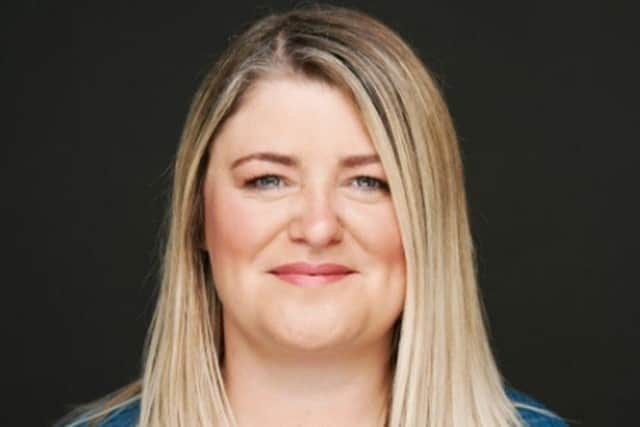
Sarah Spray and her husband Keith made the decision to adopt in 2008 after Sarah’s experience of her parents taking in children from Chernobyl when she was younger.

“But it’s not until the training and you start to learn about your child’s history that you really realise quite how different it can be”, she said.
The training focuses on childhood trauma, to prepare families for the unique challenges they might face as adoptive parents. “There are very few, if any, children who are adopted that haven’t experienced some level of trauma. And when you consider that, three days of training doesn’t then sound a lot,” Sarah added.
The couple’s adoption journey began with their daughter.
“We first met our daughter when she was 18 months old and in temporary accommodation with her foster carer after they’d had to move out of their home after a flood.
“Her foster carer opened the hotel room door and she just ran straight out, past us and down the corridor at full speed.”
The couple underwent the necessary checks and tests and attended adoption training – something all prospective adoptive parents must complete. “People have said to me before, ‘we didn’t get training to become parents’ but they really have no idea how different it is to adopt a child,” Sarah said.
The couple came to realise how little people understood about adoption. “When [our daughter] first came home I had adoption leave but Keith only had a week of paternity leave. I remember someone saying to me at work, ‘what do you need time off for? You’ve not given birth, you don’t need to recover’ I couldn’t believe it,” Sarah explained.
Socialising with new mums was also a challenge. “There was nowhere specific to go as an adoptive parent – there were no adoption playgroups. I’d go to parent and child groups and just nodded along as the other mums talked about their birth stories.
“Sometimes I’d say about my daughter’s adoption but it was easier not to because it prompted so many questions and not about adoption but about [my daughter] and her background and about why we had adopted.”
Pre-adoption training did help the couple feel equipped to deal with some of the challenges.
Sarah explains: “Telling and explaining was part of the training and that was really important for us. That doesn’t mean we told her everything that happened to her from day one but she has always known that she was adopted.
“For us that conversation came when I had a friend who was pregnant and my daughter asked about being in my tummy, I explained that she had come from another lady’s tummy but I was her mummy. She accepted it and even used to play a game where she’d wriggle up my t-shirt and pretend to be in my tummy.”
With their daughter settled, the couple decided to adopt a son aged nine months. “With [our son] we had more of an idea of what to expect in terms of the adoption process but nothing could have prepared us for his permanence report. “It was heartbreaking to read, we just wanted to take him home and add him into our family.”
The couple’s son had been in the care of the local authority since birth. He had a genetic disorder and an uncertain future. “Just like our daughter, he was happy and hitting milestones but by the age of three was starting to demonstrate certain behaviours and his anxiety was really bad,” Sarah said.
“As he got older his anxiety meant he didn’t want to go to school, it was physical at times.
“Everyone is affected by trauma on some level. Adopted children often don’t remember what has happened to them in the normal sense, but what has happened to them is in their conscience.
“Those memories do exist and that influences their behaviour and who they are throughout their lives.”
Both children attended mainstream schools. Access to support differed and Sarah found there were gaps in support and in what schools were told about the children.
“Some schools know about support, others don’t. Most mainstream schools are not trauma-informed – they don’t always know that young people who have experienced trauma need a different approach.
“It wasn’t until things were really quite bad with [our son] that I really pushed that school told me about the Adoption Support Fund.” It’s a fund that now enables both [of the couple’s children] to access specialist support.
Fast forward 16 years from the start of her journey as an adoptive parent and Sarah, a project coordinator at Menphys, is now tasked with leading Family Foundations, a programme inspired by her own experience.
Menphys said the programme will provide comprehensive advocacy services, supporting families to navigate the complex education, health, and care systems to secure the support their children need.
Sarah said: “The programme is here to help the hundreds of people across Leicester and Leicestershire that need this support. It’s about understanding the Special Educational Needs and Disabilities (SEND) child, providing that holistic wrap around care for families and educating people within our communities about SEND.
“And one of the most important elements for me is to build a network for families. I want to connect adoptive parents so that they speak openly and honestly to others who have been through or are going through something similar.
“I want them to feel that they are part of a community. Having people who have an understanding of the unique challenges you face as adoptive parents is a lifeline that lots of adoptive families don’t have. We want to change that.”