
Olympic champion Adam Peaty on elite performance, mental resilience and lessons from training in Loughborough
Adam Peaty’s extraordinary journey to Olympic greatness continues just down the road in Loughborough, where he trains at the National Centre and pushes the limits of elite sport.
Now one of the UK’s most celebrated Olympian speakers, Adam has become a global icon in swimming — known not only for his historic breaststroke records and Olympic triumphs, but also for his candid advocacy around mental wellbeing and resilience.
As one of the most in-demand mental resilience speakers and high-performance speakers, Adam shares powerful lessons on discipline, focus, and what it really takes to be the best in the world.
In this exclusive interview, he reflects on elite mindset, managing anxiety, and the personal strategies that have helped him rise — and stay — at the top.
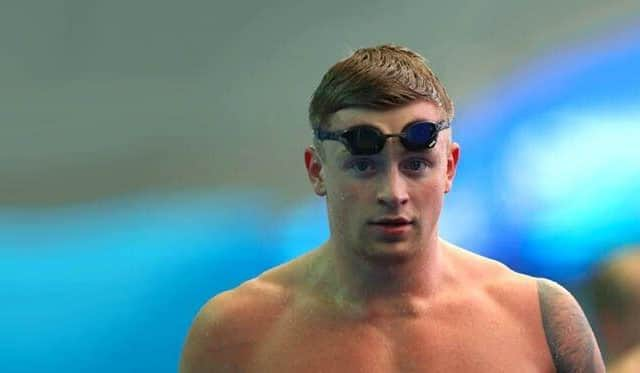

Q: When we talk about elite sport, the term “high performance” is used a lot — but from your perspective, what does it truly mean to achieve that level?
Adam Peaty: “I think, without thinking too deep about it, I think high performance for me is being in my kind of flow state. Letting the performance come to me instead of going out to get a performance — something that comes naturally.
“I think, obviously, you’ve got a huge, huge opportunity for preparation and obviously the training, the nutrition, the psychology — all these thousands and thousands of variables which make a high-performance athlete.
“But when it really comes down to the day, for me it’s almost like that moment was meant to be, like it was fate. And the flow state is just full confidence in what I’m doing and full confidence knowing that you can’t be beaten. So I think there’s not really a simple answer, unfortunately, but I think it is just being the athlete I was always meant to be.”
Q: Standing on the blocks at the Olympics, with the world watching — how do you manage to stay calm and composed in such high-pressure moments?
Adam Peaty: “I mean, yeah — in 2014 I struggled with, obviously, the crowds. I found the arena quite intimidating. So I knew that the training was taking care of itself — I could work harder than anyone else, I could outwork most people, if not anyone. And I loved it — I loved the kind of the pain and the gain, as they say.
“But I knew my arena skills were down, so I was like, “Okay, how do I improve my arena skills?” One tactic we used, especially into the 2016 Olympics, was before a big stand-up — which is, you know, 100-metre breaststroke in training, so basically a like-for-like replication of what we’re doing in the race — we put headphones in before we did it.
“I was visualising the race, visualising what I was doing, but in the headphones it was like I was in the call room. There was almost like white noise beforehand, and then it would be like: “Lane eight... lane one... lane two...” Then it comes down to: “Lane four, Adam Peaty, Great Britain.”
“All this audio was real — it was taken from the 2015 World Championships — and that helped me massively. Because one of the biggest things was like, “Oh, what’s the crowd going to be like? What’s going to happen?” So by the time I got there, I didn’t have to worry about that. All I had to worry about was my technique and the race.
“Really, all of that was taking care of itself anyway because of muscle memory. As I said, I was in my flow state, I was enjoying it. I wasn’t worried about what the crowd was going to do or how they were going to respond — I was fully able to concentrate on what I was doing in the moment.”
Q: You’ve spoken openly about your own mental health. What strategies have helped you deal with anxiety, especially at the highest level of competition?
Adam Peaty: “Well, I learnt through an ex-SAS soldier. He said that through his whole career in the SAS, what helped him was that if they had a problem and they knew it was a problem, but if they couldn’t do anything about it — stop worrying about it. If there’s nothing you can do about it, then why are we worrying anyway? Accept it and push on.
“I know it’s very hard to — it sounds a lot more simple than it is because sometimes I’ve got a problem in my head I can’t get around. But try to put your brain into that mindset: if you can’t help it, then why do we worry about it?
“I think it’s being completely honest with yourself and trying not to hide those feelings that may create anxiety. So for me, if, for example, someone swims extremely fast before the Olympics, that would create anxiety for everyone — because it’s like, “Oh, what are they going to do at the Olympics?” But for me it would be like, “It doesn’t mean anything. It’s what happens on the day.” And I know on the day, I’m the best performer in the world. I’ve got six or seven years of championships and world records to prove that.
“So it’s not like I’m just going out there and chatting — you know, I haven’t done any of this. It’s having that confidence. But I think anxiety — everyone has it. I think it’s... I mean, you’ll know more about the psychology behind it and why it happens. But in simple terms, as an athlete, if there’s nothing I can do about it, then expel it — because there’s no place for that energy to take away from my own energy. It’s almost like a demon on my shoulder.”
Q: In an era dominated by social media and comparison culture, how important is it for athletes — and young people in general — to stay focused on their own path rather than others’?
Adam Peaty: “I think one of the most valuable things I’ve learned in the past year is that, if you can — me and Mel always say that freedom is the best feeling — and just being you, being free, not caring what’s going on outside or on social media.
“Social media is getting worse, man — it’s horrendous. You see anything and you think, “Oh, why haven’t I got that?” or “Why can’t I do that?” And it’s like, “Oh no, I can’t do that because I’m doing this — I’m trying to be the best at what I do.” But initially, it creates a feeling — initially, jealousy.
“Of course you feel it. You literally see people on Instagram and think, “How have you done that? Why can’t I have that?” That’s just jealousy — the initial thought. Then you come to the fact: you never know what they might be going through or what they’ve gone through to get to that point. Most importantly — it might not even be real.
“Social media has created that. I feel for the next generation of people and athletes who come up through that system. It’s so dangerous. I hardly go on any of it now. I just go on, upload, see how my friends are doing, log off. Probably ten minutes — I have a timer of 15 minutes a day for all the social media. Any more time than that and my brain starts to go into a fog — like literally a zombie.
“It creates those negative thoughts that don’t need to exist. If you really took it away and thought about your life — walked outside, breathed in — we live such a good life. Personally, I do. I’m very grateful. I think if you have gratitude and humility at the same time, then you’re free.
“That’s the most important thing an athlete can have when they’re behind the blocks in an Olympic final — if you’re fully confident in yourself and who you are, and not having to compare yourself to other people, you’re a weapon.”
Q: From your own journey, what qualities do you think set apart the coaches who bring out the best in the athletes they work with?
Adam Peaty: “I think a great coach — it’s a relationship that you have with your athlete, or your client, or your customer. I think a great coach is charismatic. I think charisma is so, so important.
“Adaptability — are they adaptable? How are they under pressure? Again, there are hundreds and hundreds of things, but I think one of the most important ones is honesty and communication with that honesty. And just being willing to try something different.
“I think a coach who’s been doing the same style for 10 years or 20 years because “it’s old school and it works” won’t necessarily get my respect. Because that just works — a great coach for me is someone who continually learns, continually tries new things and can have fun with it.
“We always talk about performance so seriously because we talk about medals, we talk about money, we talk about the Olympics — and how much that can have on the thingy, and what does that equal for the millions of people and the funding back home? There are so many things tied to it.
“Yet we need to keep the fun in there. That’s what Mel does brilliantly. If we lose the fun, we lose the feeling, the youth of the sport, and we lose the real reason why we do it. There’s nothing to it. We’ve lost the sport. That’s why you see some of the greatest athletes in the world probably fall off — because they’ve lost why that kid picked up the racket. They’ve lost why that kid picked up the goggles.
“Never ever lose that person inside of you. Never ever lose that person going, “Right, I want to be better than yesterday.” That is it. Simple. Keep it simple. And the greatest coaches always understand that. They’ll keep it simple. And that’s what Mel does brilliantly.”
This exclusive interview with Adam Peaty was conducted by Chris Tompkins.