
Explained: How possible changes to Leicestershire councils could affect your life
Huge changes are in the pipeline for councils in Leicester and Leicestershire.
The changes – which have been ordered by the Government – are likely to affect yours and your family’s lives.
Three possible ways forward were submitted to the Government earlier this year ahead of the March deadline, and all remain on the table after Westminster responded to the submissions this week. Deputy prime minister Angela Rayner wants areas which have two tiers of governance – such as Leicestershire – to set up a single-tier structure instead.
Locally, that effectively means scrapping the seven district and borough councils – such as Harborough District Council – which share responsibilities for delivering services with Leicestershire County Council. When the changes have been made, county residents will instead see all of their services delivered by a single authority. That is currently the case in Leicester, where Leicester City Council oversees the delivery of all services, from bin collections to social care.
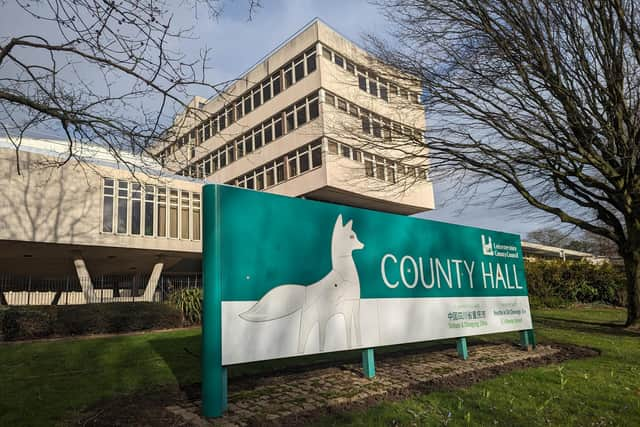

However, the move to a ‘single authority’ does not necessarily mean just one council for Leicestershire. One of the three submissions sent to the Government envisions two, separate councils for the ‘county doughnut’, each covering one geographical half, with the city and Rutland remaining separate.
The second proposes a single council for Leicestershire, also with separate authorities remaining for the city and for Rutland, which is led by Rutland County Council.
The third submission is perhaps the most controversial. It puts forward the possible expansion of Leicester’s borders into parts of the county. This is something city mayor Sir Peter Soulsby has said he believes the city needs in order to be able to balance its books beyond the 2027/28 financial year, which the authority is required to do by law.
Sir Peter put forward plans to take towns and villages from each of the districts and boroughs around the city’s edges in March. However, the Government response reiterated that it would prefer any boundary changes to follow the existing district borders, creating questions over whether city plans will have to be altered to bring a whole district – or multiple districts – into the Leicester fold.
The matter is further complicated by a change of leadership in the county since the three proposals were submitted, with Reform UK taking control of Leicestershire County Council from the Conservatives at May’s local elections.
While new council leader Dan Harrison has indicated he is currently leaning towards the single council for Leicestershire option, with no expansion of Leicester’s boundaries, he has also said he will be talking to other local leaders to understand their views.
The Government’s response to the three proposals offered little clarity on which would ultimately be implemented. So, here is an explanation of who wants what, why the changes are happening and how you will be affected.
Here, we answer the key questions.
What is the current political structure for Leicester, Leicestershire and Rutland (LLR)?
Currently, there are 10 councils across LLR. They are: Leicester City Council, Leicestershire County Council, Rutland County Council, Blaby District Council, Charnwood Borough Council, Harborough District Council, Hinckley and Bosworth Borough Council, Melton Borough Council, North West Leicestershire District Council, and Oadby and Wigston Borough Council.
In the county, there are two tiers of governance, with power shared between the county council, which has responsibilities for areas including highways, education, waste sites and planning decisions on major infrastructure projects, and the seven district and borough councils, which take on duties such as bin collections, social housing and local planning decisions, including new housing, and parks.
The political set-up in Leicester and Rutland is simpler. Each area has one council, known as a unitary authority, which holds all the local political decision-making power for that area.
What are the proposed changes?
Three potential visions for the future of local political structures have been put forward. Disagreement is rife between our local leaders on how many authorities Leicestershire should have, where Rutland sits in that equation and what Leicester’s future borders should be.
Leicestershire County Council wants one large ‘donut’ authority for Leicestershire, which would not include Rutland. The district and borough councils want two new county councils, split on a roughly north-south divide, with Rutland joining the northern area – something Rutland County Council itself supports.
All of the county authorities appear to agree on one thing, however – that Leicester’s borders should stay as they currently are, and not be expanded into the county. This marks a clear departure from earlier expressions of support for an expanded city boundary, and has caused friction with city leadership which ultimately submitted its own plan for the future of local politics.
Leicester City Council is looking to take part of Blaby and Harborough districts, and part of Oadby and Wigston and Charnwood boroughs. Among the communities being eyed up are Glenfield, Oadby, Wigston, Blaby, Whetstone, Syston, Anstey, Leicester Forest East, Birstall, Kirby Muxloe, Thurmaston and Countesthorpe.
The authority’s proposal would see the city’s population grow from 372,000 now to just over 600,000 by 2028, something the city council has described it as a “sensible expansion”. Sir Peter believes this move is necessary to keep the struggling city council financially viable, and to help it meet Government-set housing targets.
Expanding Leicester’s boundaries would allow the city council to collect council tax from residents currently outside of its borders, many of whom would be in a higher council tax band than the majority of current city residents. It would also mean there would be more land, including green spaces at the city’s limits, within its boundaries for housing to go on.
Why are the plans being put forward?
The proposals are being put forward in response to the Labour Government’s plans to reorganise local authority structures across the country. The English Devolution White Paper, published in December 2024, set out the Government’s intention to merge two-tier council areas, such as Leicestershire, into a single organisation.
Deputy prime minister Angela Rayner said at the time this would “streamline” processes and save money. The Government added it would “expect all two-tier areas” to develop proposals for their mergers, saying it would deliver the reorganisation “as quickly as possible”. Where needed, the Government said, it would use “legislation” to ensure progress was made.
What is ‘devolution’?
The Government’s plans also set out its intention to hand more decision-making power to local areas in a move known as devolution. Those devolved powers could also be accompanied by additional cash. However, to unlock this, councils would have to comply with the Government’s White Paper proposals.
This is not the first time devolution has been spoken about for Leicestershire, however. Similar plans were drawn up by the previous Conservative Government, with some local areas invited to negotiate what was then called a “County Deal” with Westminster.
In February 2022, Leicestershire was among the first local authority areas to have been offered the opportunity to strike such a deal by the last Government. This would have given greater decision-making power placed in the hands of local leaders, and if a deal had been struck, it was expected to be backed by around £1 billion in additional funding for the area.
However, negotiations hit a snag when it came to light that the highest level of funding could only be unlocked if Leicestershire county joined with the city and Rutland as a combined authority – and if the three areas accepted one mayor be elected for all of them. The combined authority would have been expected to be an umbrella authority over the top of the existing structure in a similar set up to the East Midlands Combined Authority made up of Nottingham, Nottinghamshire, Derby and Derbyshire.
City mayor Sir Peter Soulsby faced backlash from some in the county after he refused to agree to this. He also at the time branded the £1 billion figure expected to be received through a local deal as “pure illusion”, saying the Government “hasn’t promised a single penny”, and questioned the value of having another tier of local Government created.
For Labour’s devolution to be unlock, the newly formed councils – regardless of which proposal is taken forward – would also likely have to set up an umbrella authority over the top of them, with expectations this would be on a Leicester, Leicestershire and Rutland footprint and that there would be an elected mayor leading the umbrella authority.
What does the Government think of the local plans?
The Government has now responded to the initial proposals put to it by our councils – but it has not made a decision on any of them. This means all three are still in play and any of them could be the winning option. Full plans for each are to be submitted to the Government later this year.
The response did, however, offer some guidance to council leaders. These included over the potential changes to city boundaries, with the Government saying if this option is taken forward, there should be “strong public services and financial sustainability-related justification for the change”.
While the city council has argued that it would not be able to stay financially afloat if it does not expand, the Government also wants evidence of “how efficiency savings have been considered” and proof that the local identities of different areas have been taken into account through the proposals.
The Government also reiterated its preference, originally set out in its devolution white paper, for any changes to council boundaries, such as in the city’s proposal, to be based on whole district or borough areas, unless there is a a “strong justification” for “more complex changes”. This creates questions over whether the city council will need to alter its approach to which areas it wants to bring into the city as its existing plans take parts of a number of different districts and boroughs.
The Government also appeared to seek clarity on the potential impacts of splitting those services which are currently delivered by just Leicestershire County Council across the county as a whole if the districts’ plan is taken forwards. It said it would “welcome further details” on how they “can be maintained” in the event of “disaggregation”, including in areas such as special educational needs, social care and children’s services. These are all statutory duties, meaning the council is required by law to provide them.
For all of the options, the Government asked how potential safeguarding risks from reorganising services could be managed, and what disruption there might be to areas such as schools, highways and health. It also sought further information on how the various plans could deliver savings, requesting councils demonstrate which of the options “best delivers value for money for taxpayers” and keeps all of the proposed authorities financially viable.
The Government’s response also offered some insight into what the make-up of the new councils could look like, saying there would “need” to be a “compelling case” if a council were to have more than 100 elected members. Currently there are 305 councillors across Leicestershire County Council and the district and borough councils alone.
The response also indicated a desire for local people to have more of a say, with the Government seeking more information over how the new structures would engage local communities once up and running, and how their voice and participation would be strengthened. Residents, volunteer and community groups, and businesses should also be consulted on the three plans, the Government added.
What could the changes mean for you?
Here again our political leaders disagree. For the county council heads, one Leicestershire authority is the ‘common-sense’ approach.
They believe it would save the most money – potentially around £30 million a year – as it would end the duplication of services locally. Former acting leader Deborah Taylor, who is now leader of the opposition on the county council, also believes it would “produce the best outcomes for residents”, while splitting Leicestershire in two, as desired by the district and borough chiefs, would result in a “postcode lottery” for residents when it came to the level of service they would receive.
Conversely, those in charge of the districts, boroughs and Rutland feel one authority for the county would be “too remote” and “too cumbersome”. By dividing Leicestershire, with Rutland included, they believe they can still deliver savings while also ensuring the new councils “remain[ed] connected to their communities”.
Coun Taylor disagreed with the criticism that a single county authority would be too far removed from those it supports, saying Leicestershire County Council already delivers all of its services “in localities and local hubs”, while social care is delivered “in people’s homes”. She added: “You can’t get any more local than that.”
However, the county council does have early ideas for how to maintain a sense of ‘local’ in local government. Coun Taylor said her team was planning to set out proposals for new local area committees, including local area planning committees, featuring the elected councillors for that area. There would also be an “enhanced role” for parish and town councils, Coun Taylor said, adding that the authority would be looking at what further responsibilities could be shared with them.
For Leicester, then, the main changes would depend on whether borders are moved or not. Sir Peter said that, should the Government support an expansion, anyone who finds themselves as new city residents from boundary changes would be “part of the city in every sense”.
They would have Leicester City Council providing their services and would be able to vote on who they want representing them on the authority. Their council tax payments would also go to the city.
Some have raised concerns that the new city boundaries would mean higher taxes for those who fall within the new border. Fears over house prices falling and insurance costs rising have also been expressed. There are further worries that the new borders would lead to green spaces at the edges of the city being built on as Leicester City Council attempts to meet its housing targets and beat a local housing crisis.
However, Sir Peter said he believes any new city resident would not see a noticeable difference. He told the LDRS: “Most people who live either side of the boundary will tell you that the levels of service that they get are broadly comparable.
“In a number of parts of the city, I think even the people who live there, have difficulty telling you where those boundaries are and it’s certainly not any difference in services that mark them.”
When could the changes happen?
While timelines for the reorganisation are still not set in stone, the Government has now offered some more clarity over when the changes could be implements. Final proposals need to be submitted to the Government in late November of this year.
It is then anticipated that the Government will lead on public consultations on those plans, and it is the Government itself which will make the final decision over which is taken forwards. The Government said its “most ambitious” timeline would then see elections for the new unitary councils take place in May 2027, and the councils themselves would “go live” the following April. At that point, our existing councils would be “dissolved”.