
Comment: More democracy or more bureaucracy? What a town council could really mean for Harborough
Under proposed plans to reshape local councils across the country, talk of a town council for Market Harborough have been getting louder. Councillor Simon Whelband, leader of the Conservatives at Harborough District Council, puts his views forward - and sounds a note of caution.
Over the past week or so, there’s been some discussion online about the idea of a town council for Market Harborough. I’m not against the principle; it’s for residents to decide whether to sign the petition asking Harborough District Council (HDC) to explore it. But it’s worth being clear about what that would actually mean in practice. It’s easy to shout “democratic deficit” or “we’re not represented”, but let’s look at the facts.
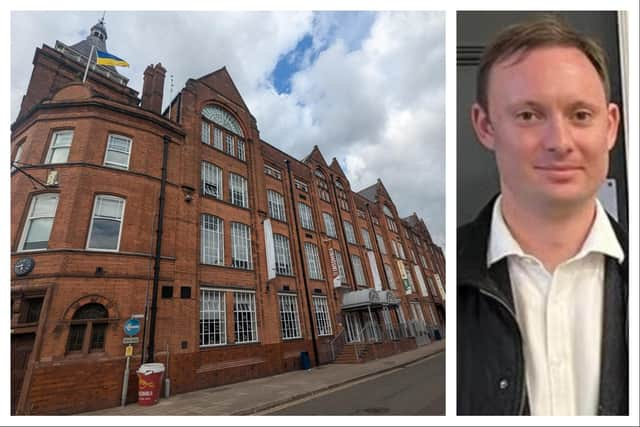

Right now, for the unparished area of Market Harborough, HDC charges “special expenses” to cover services it provides specifically for the town. That means taxpayers elsewhere in the district aren’t paying for Harborough-only amenities. The proposal from some residents is that a town council would take this on instead.
While I can understand the argument for “more democracy,” decisions affecting Market Harborough are already taken by democratically elected councillors at meetings open to the public. The Special Expenses Advisory Panel – made up of councillors from the town – discusses Harborough-related issues in public meetings, which residents can also watch online.
So it’s worth asking what a town council would actually do differently.
If we look at our only other one in the district – Lutterworth Town Council – its responsibilities include maintaining parks, open spaces and playgrounds; managing allotments and waiting lists; running events such as the Christmas Lights switch-on and Film & Food Festival; managing cemeteries and burial grounds; looking after street furniture, bus shelters, benches, public toilets, and some lighting; providing community grants and supporting volunteer wardens; commenting on planning applications and neighbourhood plans; and handling verge maintenance and grass cutting. In other areas, town councils also run CCTV and car parks.
As a councillor, I can tell you that HDC has been very keen to shift responsibilities – and the costs – onto any new town council.
So before signing that petition, it’s worth thinking about what a new body would actually be responsible for. Welland Park? Little Bowden Rec? Symington’s Rec? The Friendship Park? All come with ongoing costs. Public toilets? Cost. Those events HDC currently runs – the Classic Car Show, the Christmas Lights switch-on – would likely be handed over too. Allotments, the cemetery on Northampton Road, car parks, grass cutting – all potential transfers. Then there’s the CCTV – a service primarily provided for the town – an argument could be made for shifting that too.
Then you’ll need staff to manage these services: people with experience in running large events, grounds staff, and admin support. A new council will also need people with expertise in finance and HR – more likely, it will have to hire that in. Staff bring not only salaries but National Insurance, pensions, and training. They’ll need IT equipment, software, and systems.
They’ll also need somewhere to work. A new town council will need an office – perhaps renting space from HDC at the Symington Building. That might raise legitimate questions: why are residents paying again to use the same building their taxes already fund?
And there’s another point people rarely mention: when services move, the expertise may be lost too. The experienced council officers at HDC who currently run events and maintain parks efficiently won’t necessarily transfer – they run these services as part of their wider roles, so it’s unlikely they will move across. You’ll lose that institutional knowledge and effectiveness, and a new team will have to learn on the job – at residents’ expense.
While HDC’s council tax rise is capped by government at three per cent, town councils are not. There’s no referendum limit on precepts. It’s not hard to imagine a new council increasing its charge by more than three per cent year after year to meet its new obligations. For context, Lutterworth Town Council’s precept rose by 8.11 per cent last year – that’s not a criticism, that’s just a reality.
Some may say, “Well, we don’t want X responsibility” or “HDC can keep doing Y.” But that’s not how this works. You can’t cherry-pick the fun bits and leave the rest. Either you take the responsibility – and the costs – or you don’t.
And that’s before we even consider what effect Local Government Reorganisation (LGR) might have on any new town council. The English Devolution Bill says little about town councils, but in other areas where LGR has taken place – such as Cornwall – town councils have been forced to take on responsibilities, and the costs, previously delivered by local councils. We have no idea what powers or funding might be given to town councils, or even what structure of local government will exist in the future. Initiating a review into a town council before we know what cards we’re being dealt risks wasting public money on the exercise. As I said at a recent council meeting, it’s like drawing up the blueprints before knowing what building we’re even in.
When HDC last reviewed this in the 2019 Community Governance Review, there was just one response from Market Harborough calling for a town council. I can’t say I often hear residents calling for more politicians and civil servants. Most people said then – and likely still feel – that they’d rather reduce the number of politicians and bureaucrats, not increase them.
So do think carefully before signing that petition. What sounds like more democracy could quickly become more bureaucracy – and a bigger bill. By Cllr Simon Whelband