
Next stage of 550-home plan for Broughton Astley emerges – and ‘widespread stench’ has not been taken into account, say objectors
Objectors to a major 550-home plan in Broughton Astley have said an approved waste plant’s “widespread stench” has not been taken into account in documents.
A 43-hectare site at Frolesworth Road is the subject of an initial screening application submitted to Harborough District Council (HDC).
The council concluded that an Environmental Impact Assessment (EIA) was required due to the potential effects on highways, flood risk, and odour.
At the time, dozens of residents feared flooding “tidal waves” and sewage could be on their doorstep if the major development was given the go-ahead.
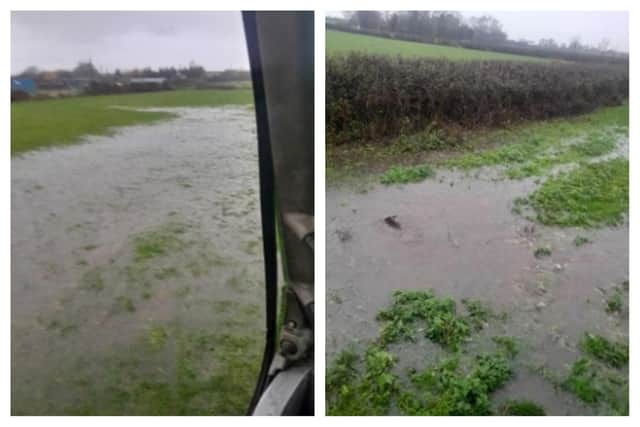

Now, a request for an environmental scoping opinion report has been put forward to HDC by applicants I.M. Land for 550 homes, including affordable homes, land for a primary school expansion, cemetery expansion and car parking, recreation and community facilities.
This pre-empts the submission of a planning application.
The majority of initial objections listed flooding and traffic issues as their biggest concerns with the plan.
Speaking previously to the Local Democracy Reporting Service (LDRS), a local farmer adjacent to the Broughton Treatment Works, said: “I’ve farmed this land for years and I’ve never seen pollution like this until the treatment works started overflowing. What’s washing across my fields isn’t just surface water — it’s sewage.”
However, alongside these objections, further concerns have been raised about a large waste-processing plant that was approved last June.
One objector wrote: “The lightweight scoping report makes little of the anaerobic digestion (AD) waste plan’s impact on the houses. The plant will be built around 300 metres away.
“There are good reasons why AD waste processing plants are located in remote areas, the main being that their widespread stench can be immense.
“As presented to the development control and regulatory board for approval, the plant will process animal waste, including factory farm and slaughterhouse waste, as well as agricultural waste. Anyone intending to buy a house on the development would be well advised to make an unannounced visit to an AD plant with a similar mix of waste.
“Access roads tend to be covered in leakages and spills – the loading area will most likely be 30 to 40mm deep in khaki sludge. The sludge is hosed down periodically and can find its way into watercourses.
“The smell will be breathtaking. The inside of a car would benefit from a canister of air con sanitiser, preferably one with antibacterial effects.”
Another said: “There is a proposed biomass/anaerobic digestion facility which is due to lie approximately 350 metres from the proposed housing development site and yet the report seeks to scope out associated effects on the basis that the facility is ‘not built yet’. This is not an acceptable scoping approach.”
In its report, I.M. Land said the proposed development was primarily residential in nature and did not include uses which are considered to be hazardous.
It said the land was not in a location which is “at risk of disasters such as flooding or land instability”.
Speaking of the waste plant at Sutton Lodge Farm the developer confirmed this would be “considered in the EIA process” and the effects of the anaerobic digester would be considered in chapters entitled “odour” and “cumulative effects”.
Consultation on the plans is open until Friday, March 6.